
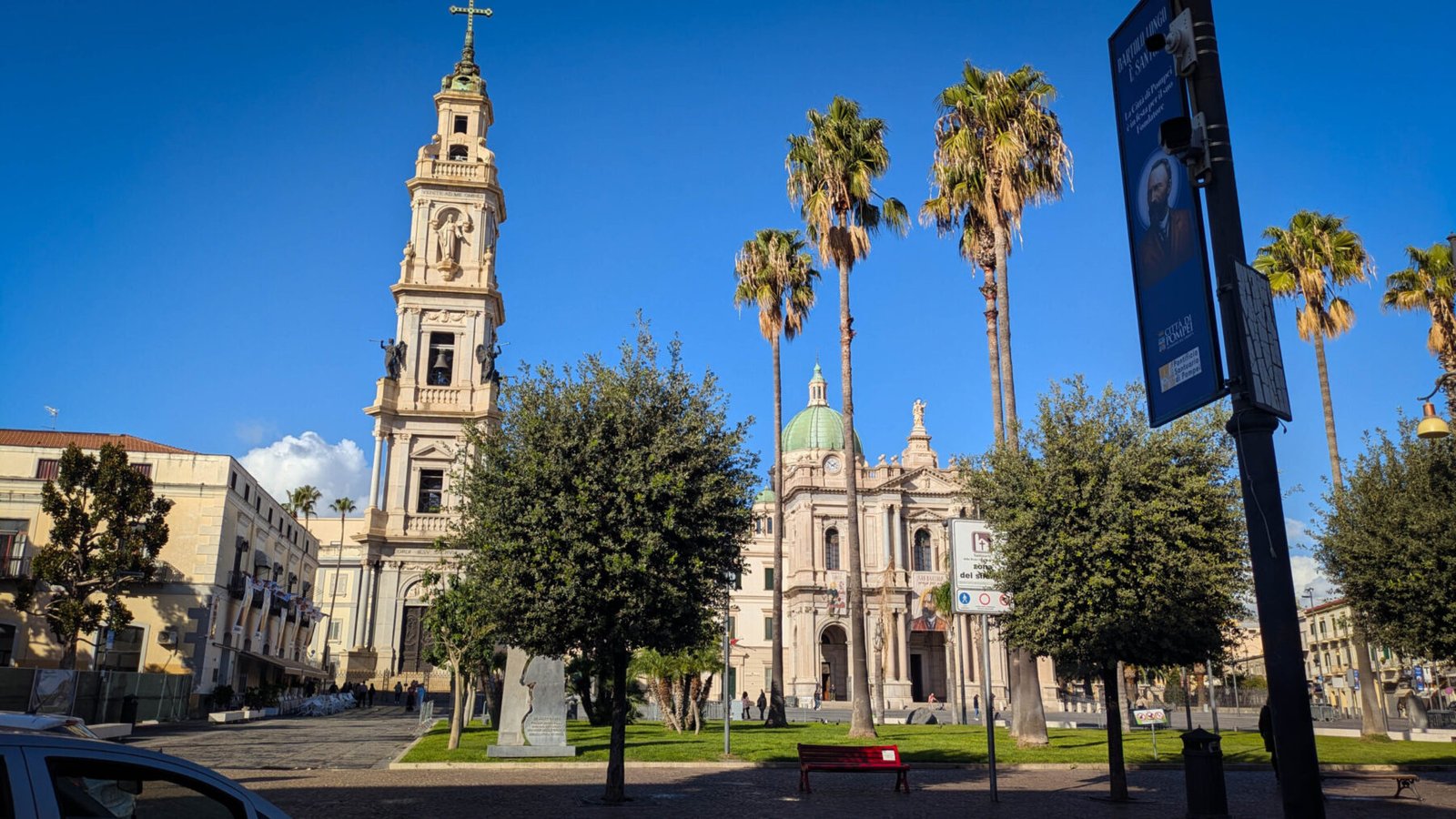
Catching the train from Naples Piazza Garibaldi straight to the heart of Pompei, we arrived in perfect sunshine. Walking up Via Sacra, we spilled out onto Piazza Bartolo Longo, surrounded by charming cafés and dominated by a magnificent church. The piazza was peaceful, with locals chatting over espresso, a few tourists admiring the view and everything moving at a slower, gentler pace.
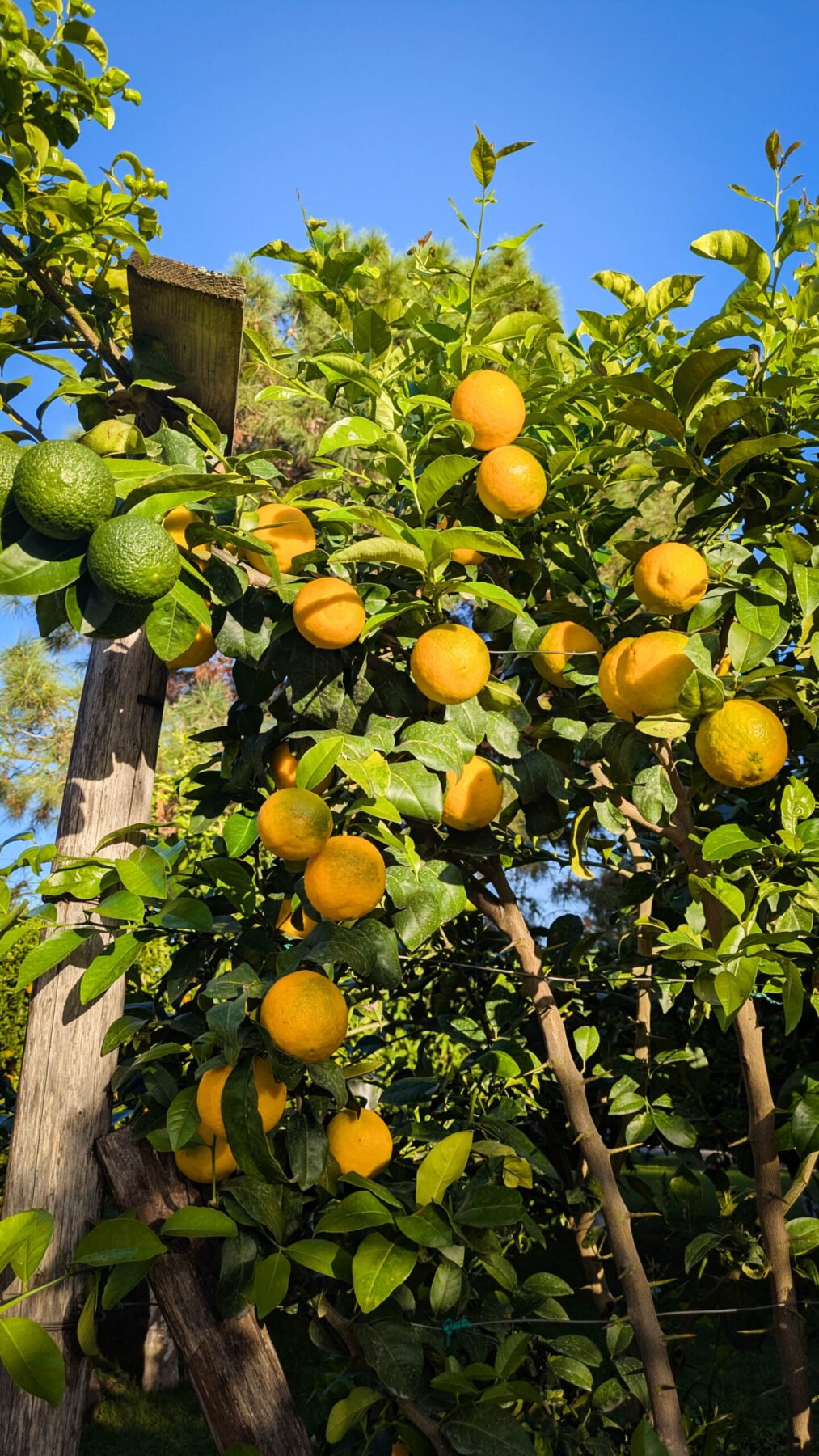
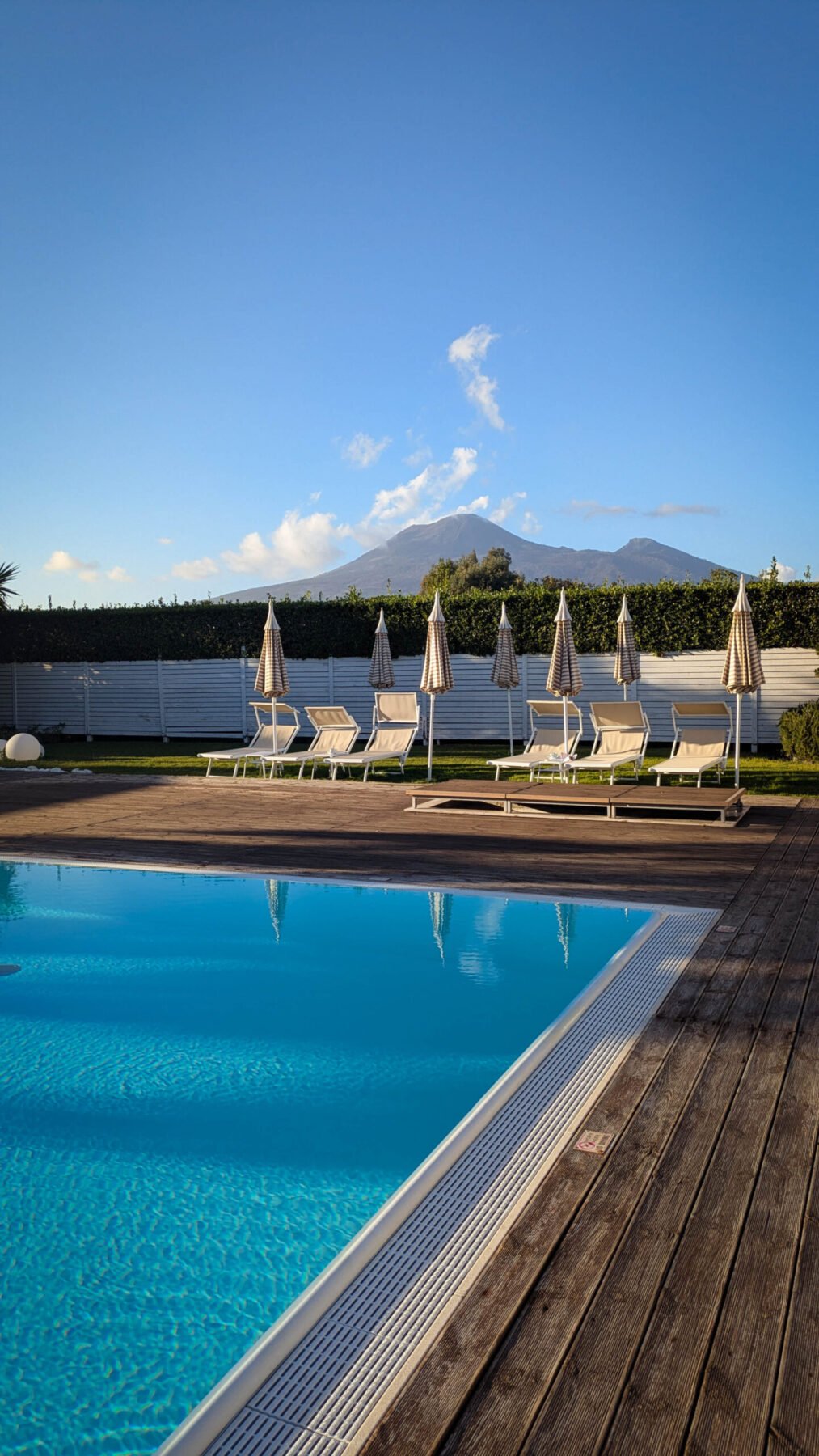
Our hotel, Bosco di Medici, couldn’t have been more perfect. Nestled among orange trees with Vesuvius rising dramatically in the background, it was the ideal base for exploring. Even in November, the warmth of the sun made it feel like summer, the kind of weather that instantly lifts your spirits.
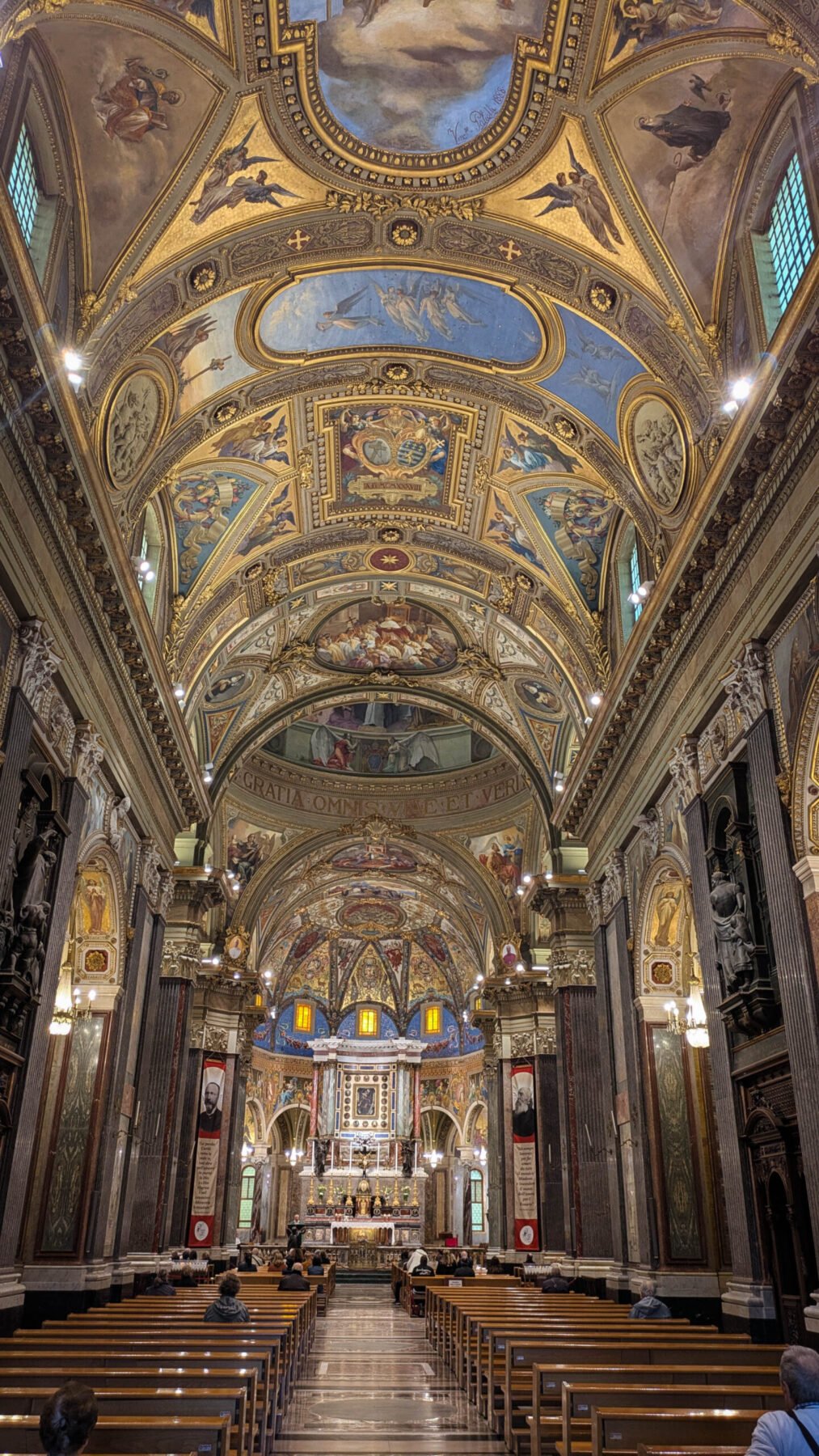
After unpacking, we wandered back into town for a little sightseeing. Our first stop was the beautifully ornate Santuario della Beata Vergine Maria del Santo Rosario di Pompei, quite the mouthful, but worth every syllable. The craftsmanship inside is astonishing, every inch of wall and ceiling is intricately decorated and you can’t help but be impressed by the craftmanship that goes into such creations.
Gelato and Golden Light
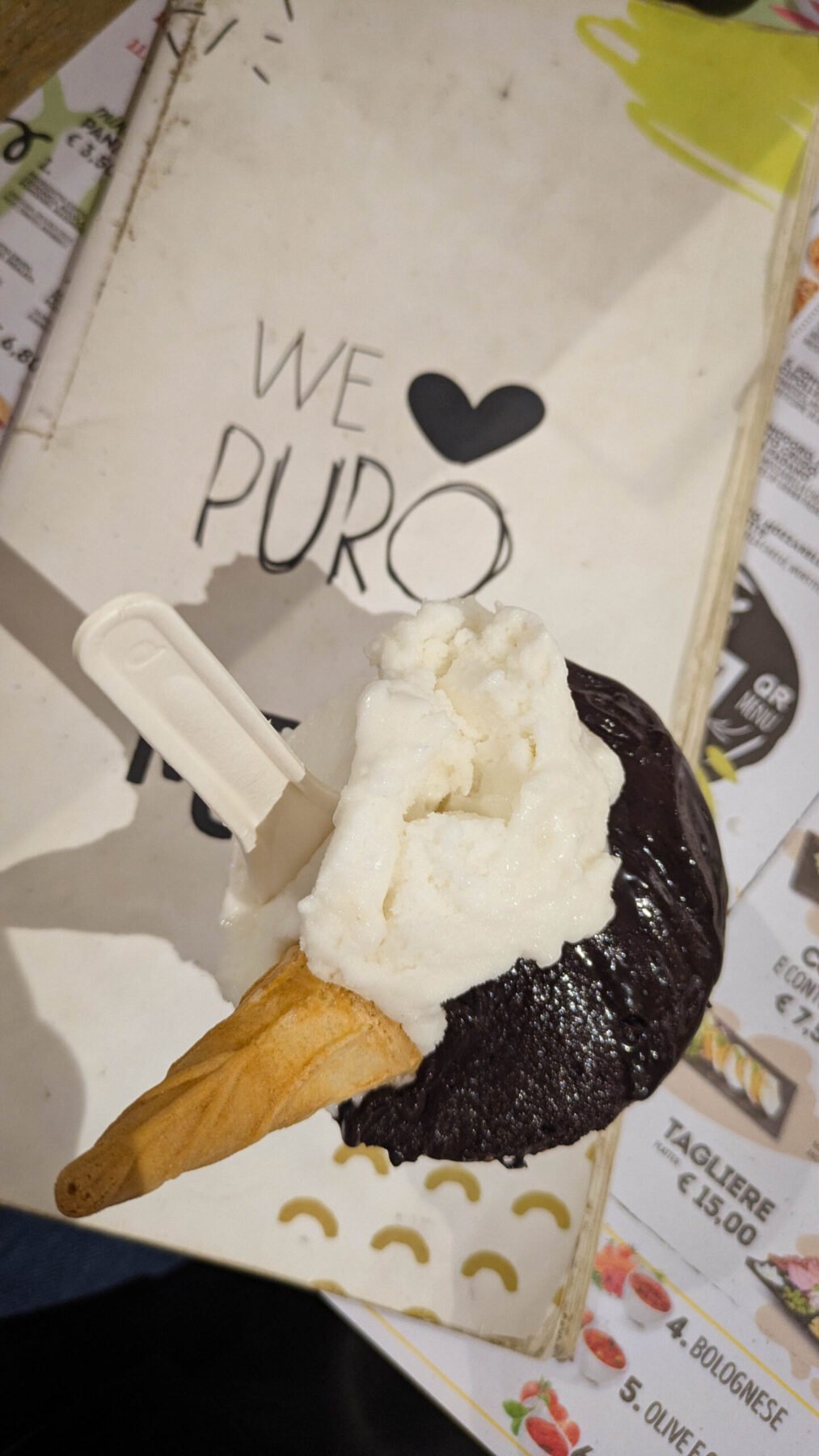
By then it was well past gelato o’clock, so we tracked down We Love Puro on Via Roma, just a short stroll from the piazza. Their dairy-free gelato was heavenly, rich dark chocolate, mango, coconut, lemon and a few other tempting flavours. I didn’t hesitate once I saw coconut on the menu, pairing it with dark chocolate, it became my very own Bounty in a cup.
Deliziosa!
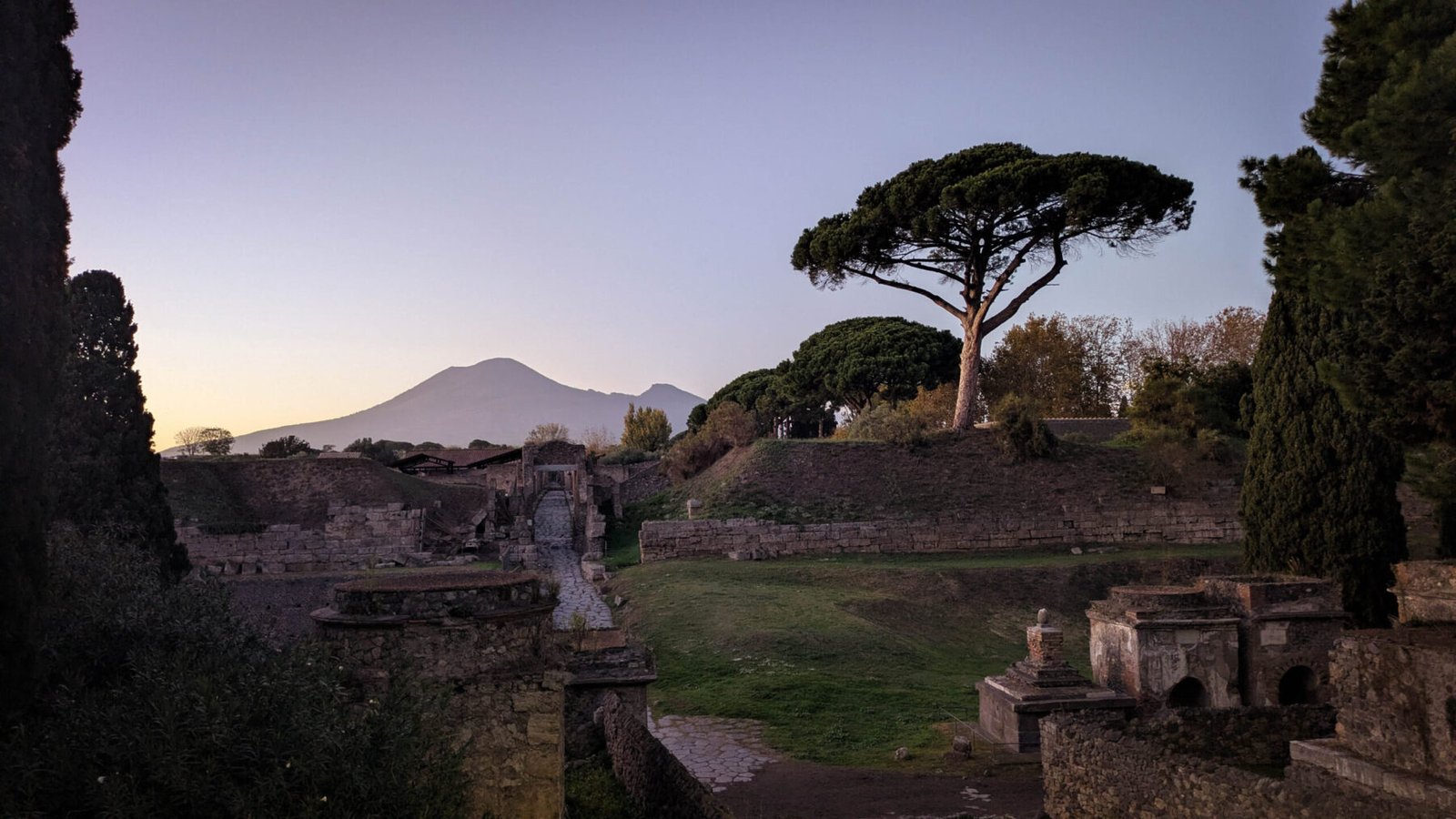
As we finished our gelato, the sun began to set, casting warm light over the ancient ruins just across the street and we could see Vesuvius standing guard, a hauntingly beautiful reminder of what awaited us the next day.
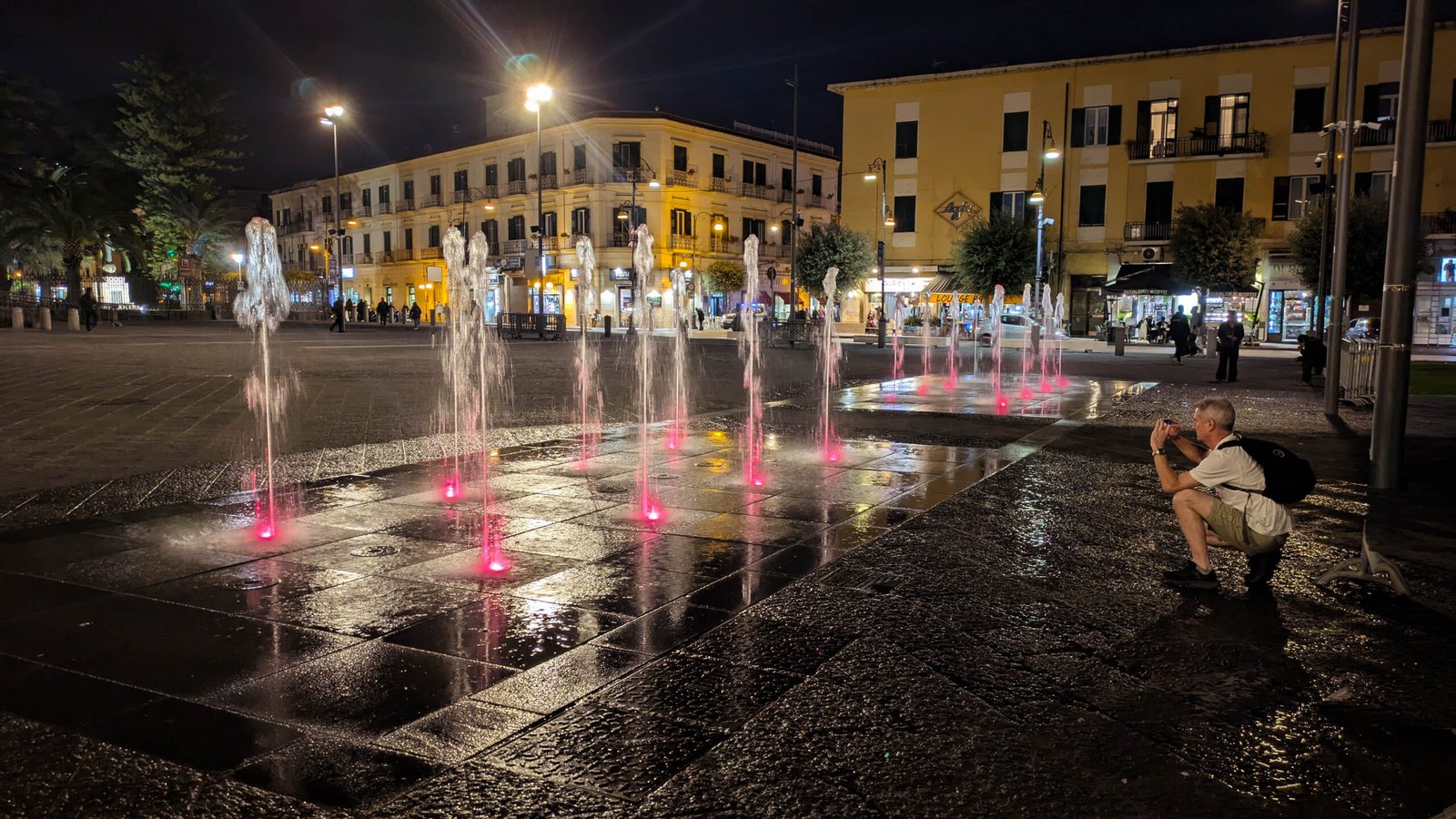
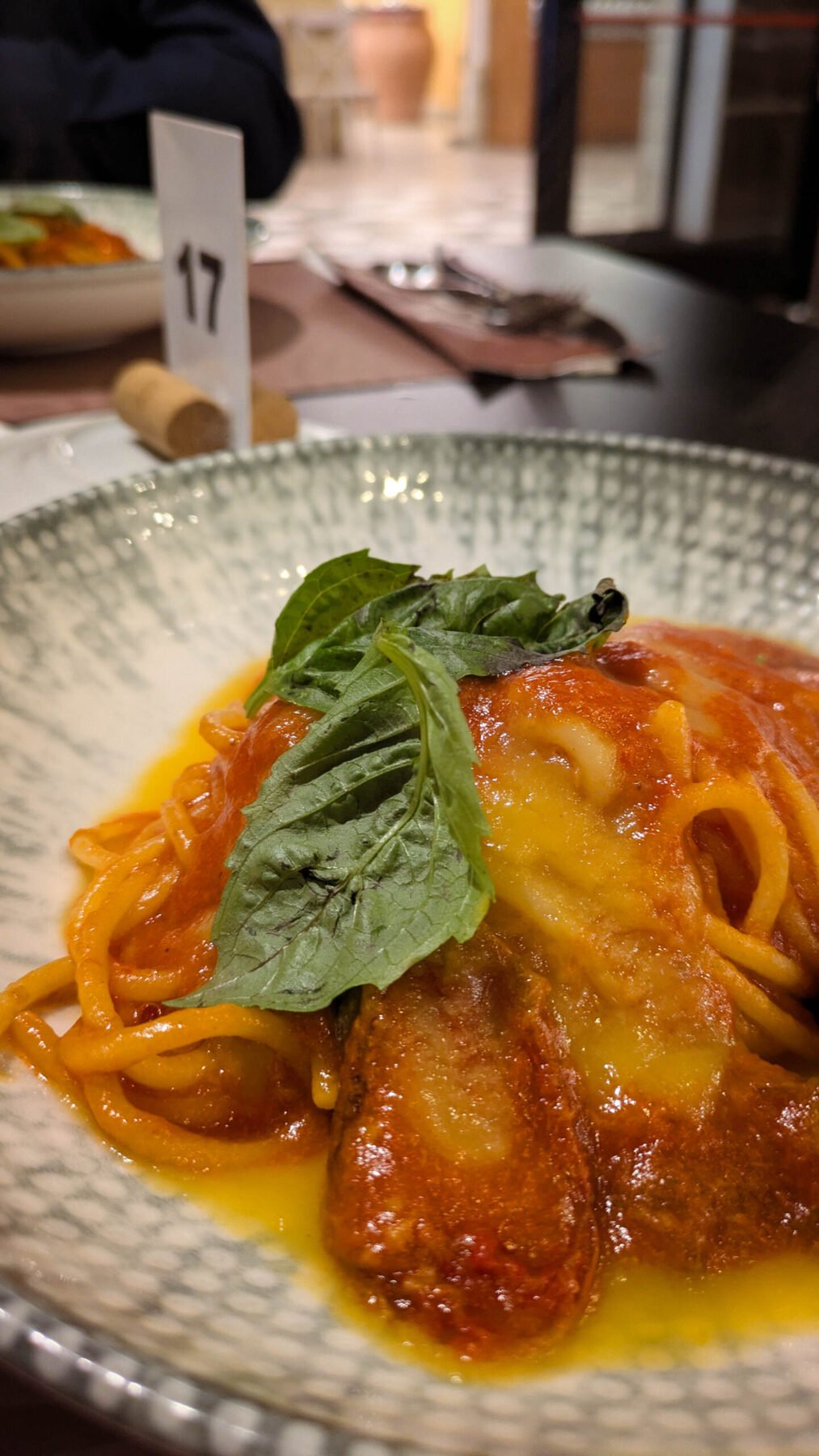
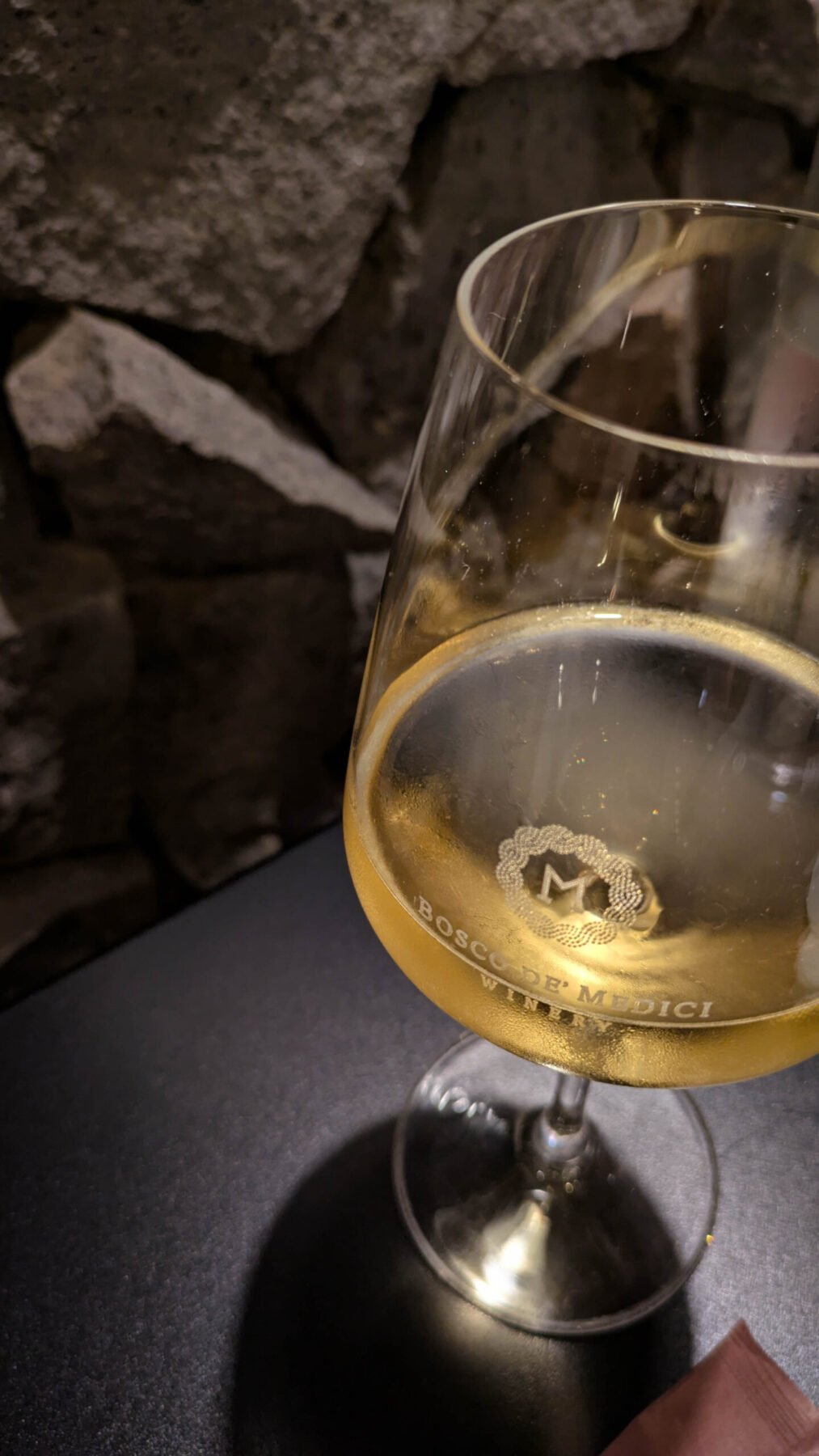
Strolling back towards the hotel, we stopped again at Piazza Bartolo Longo, where the fountains danced with colour under the night lights, the perfect excuse to get the camera out. Dinner that evening was at our hotel, where we enjoyed a flavour-packed pasta dish paired with a crisp Pompeian white wine. It was the perfect end to our first day in this remarkable city.
Exploring the Ruins of Pompei
We couldn’t have chosen a better day to explore the Pompei Ruins. By sheer luck, our visit fell on 4th November, National Unity and Armed Forces Day, meaning free entry for everyone. A happy coincidence that made the day even more memorable.
We entered via the Piazza Anfiteatro gate, just a short walk from our hotel and stood for a moment to plan our route through this vast archaeological wonder. First stop, the Amphitheatre.
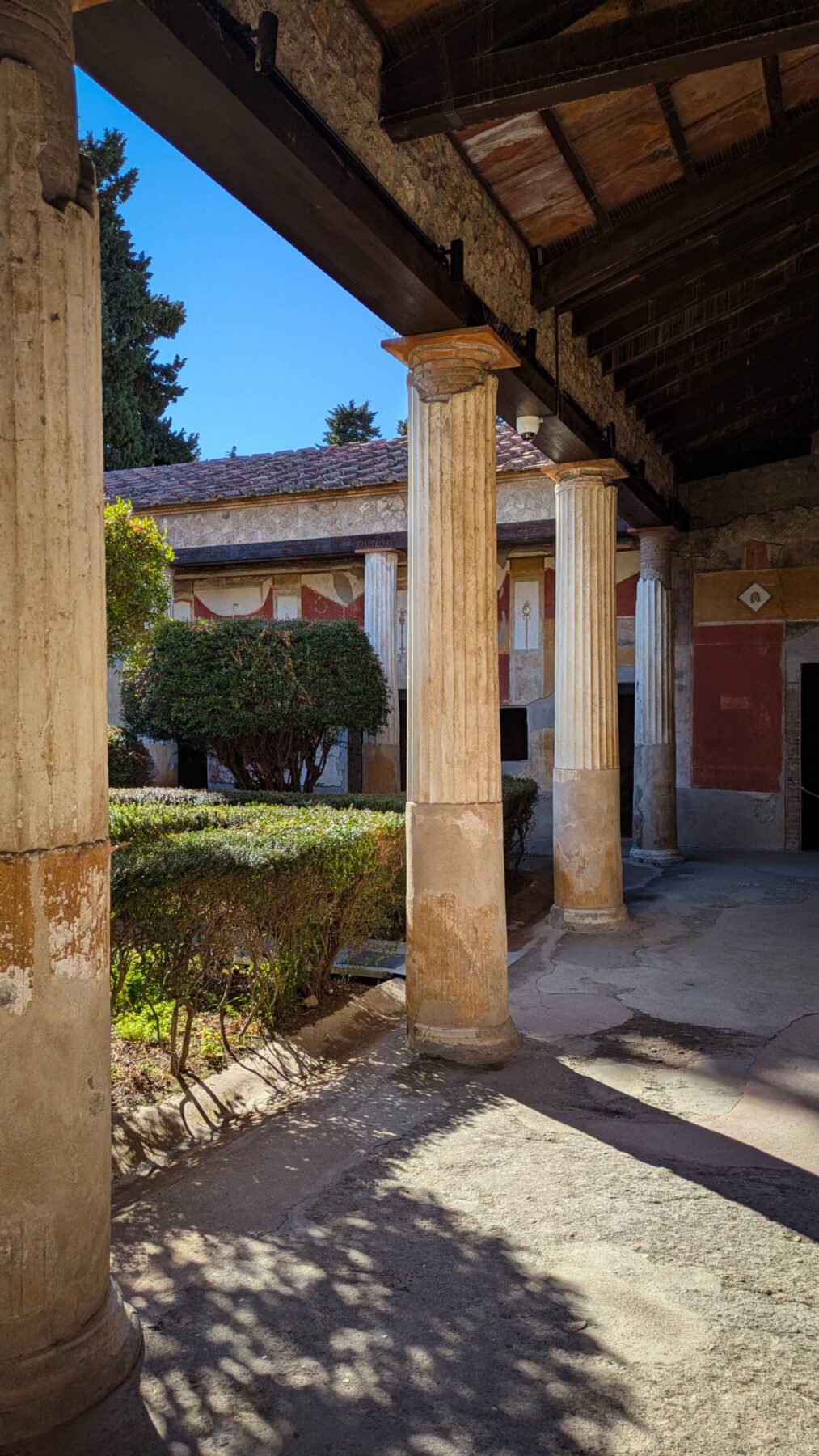
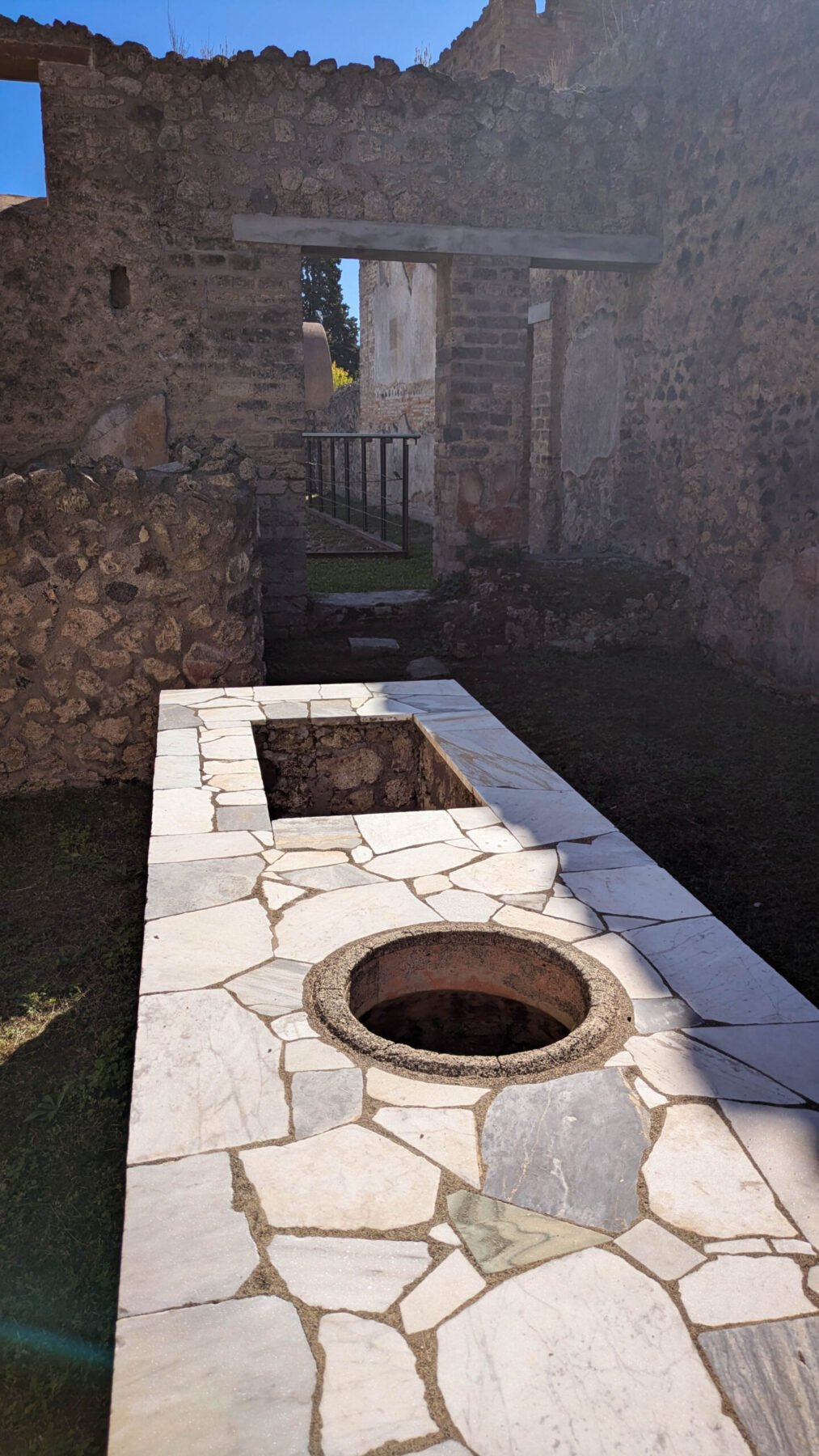
And so began my many opportunities to regale Aidan with a few of the terms I had learned in my Roman Architecture course from way back in 2015. From vomitorium (one of my favourite terms and easiest to remember, to “spew forth”!) to the thermopolium (the ancient takeaway!), caldarium, frigidarium, it all came flooding back! Caldarium is one of those reminders that we should be careful what we ask for in Italian, Calda is hot! See I’ve bored you to tears now haven’t I! Aidan was treated to this little impromptu lecture and I’m proud to say he can now identify an impluvium and peristyle with impressive confidence.
A City Frozen in Time
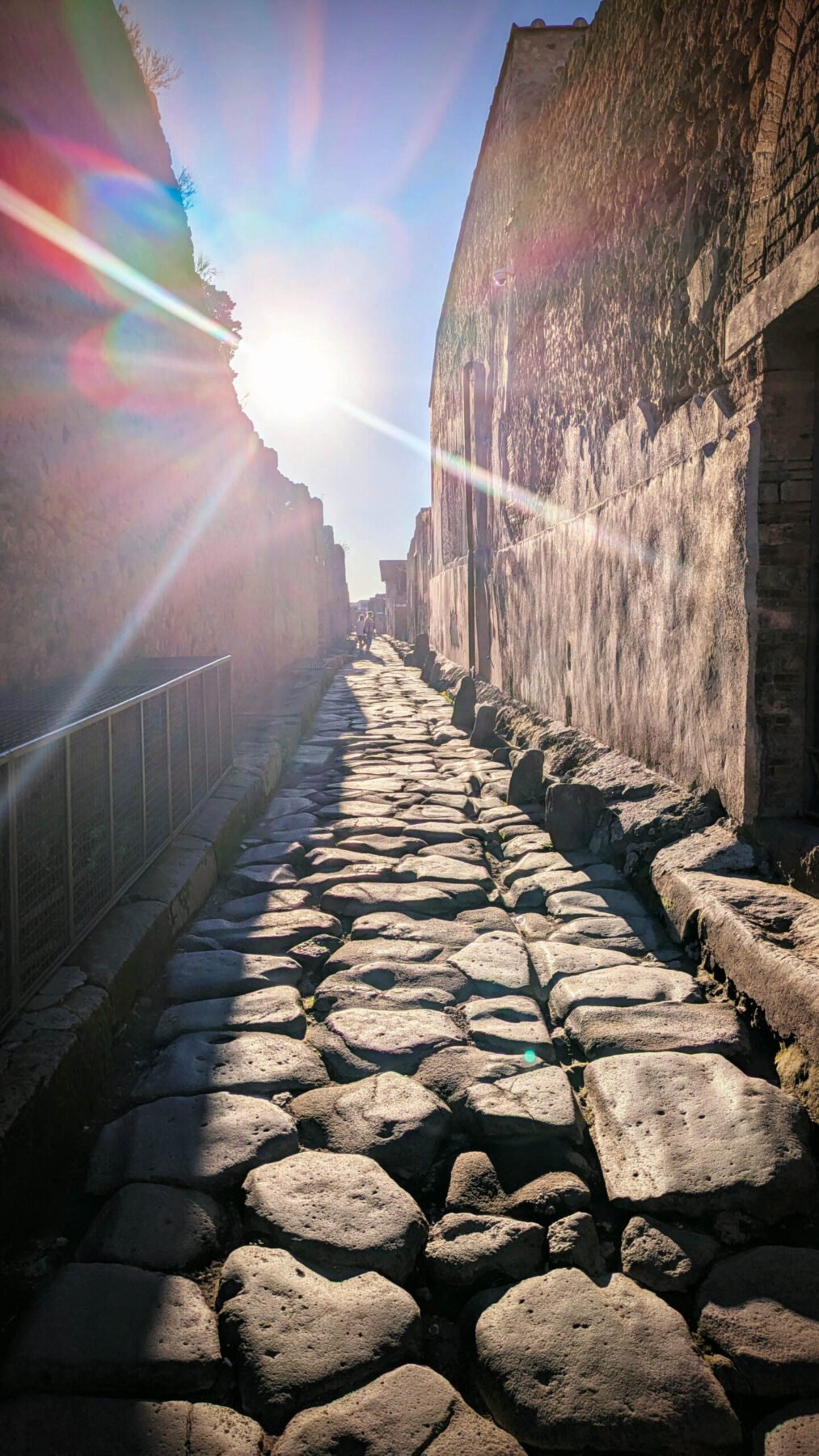
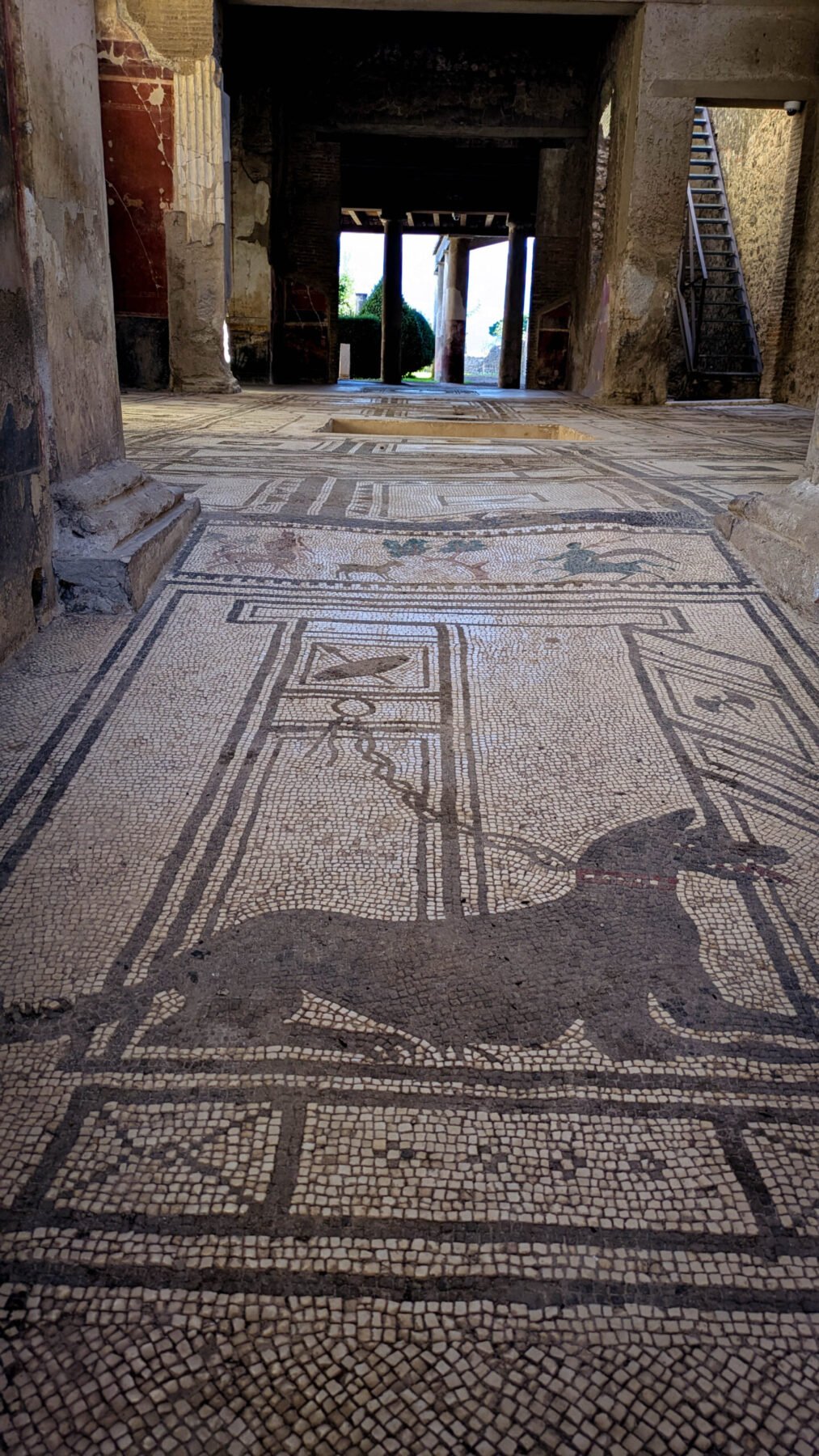
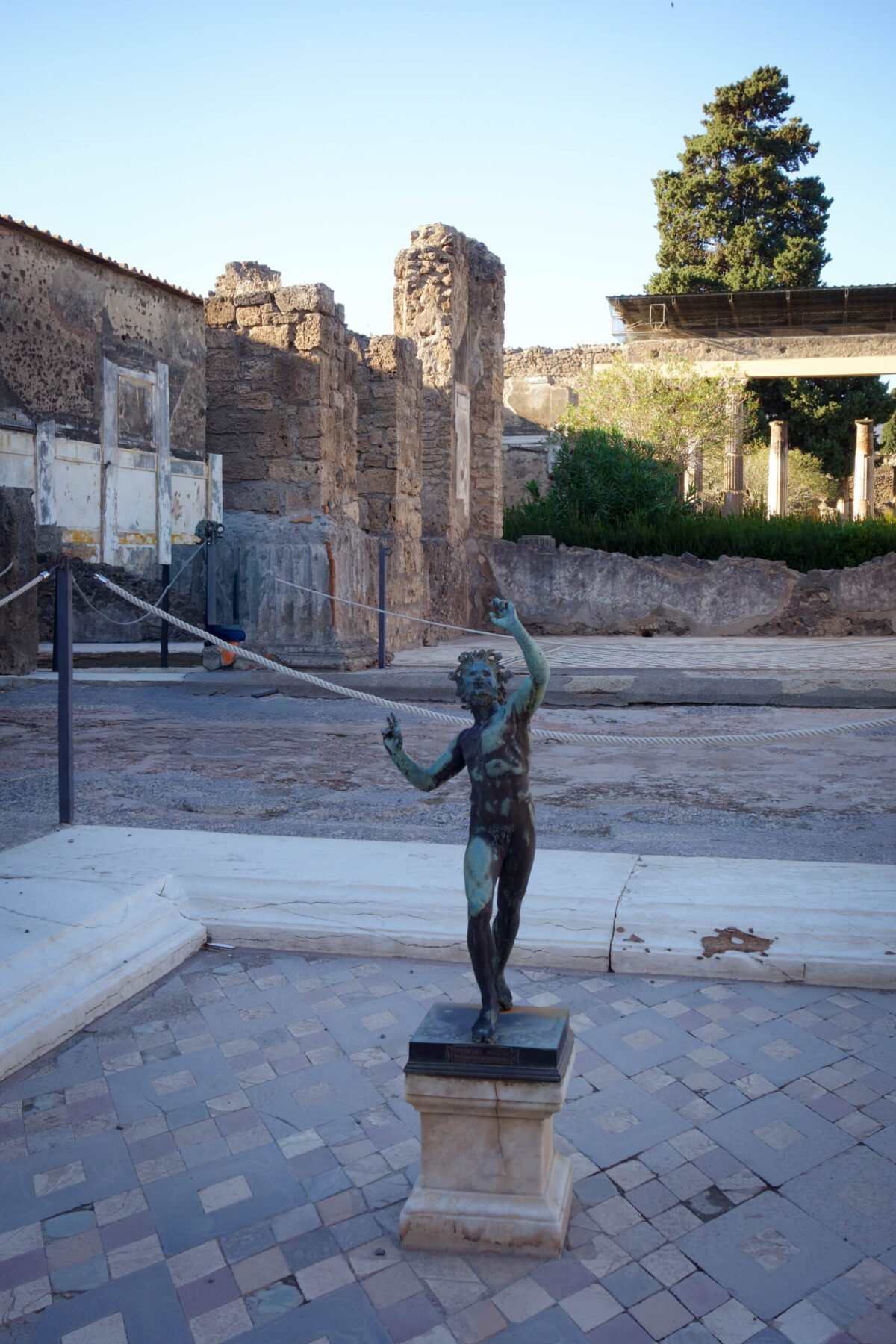
As we meandered through the cobbled streets, exploring the homes of those who lived, and perished, during Vesuvius’ eruption in AD79, it was impossible not to be awestruck. The sheer structure, beauty and resilience of Pompei’s architecture show just how advanced the city once was. Standing on those same streets, with the volcano looming silently above, it’s amazing to imagine those going about their day over 2 millennia before.
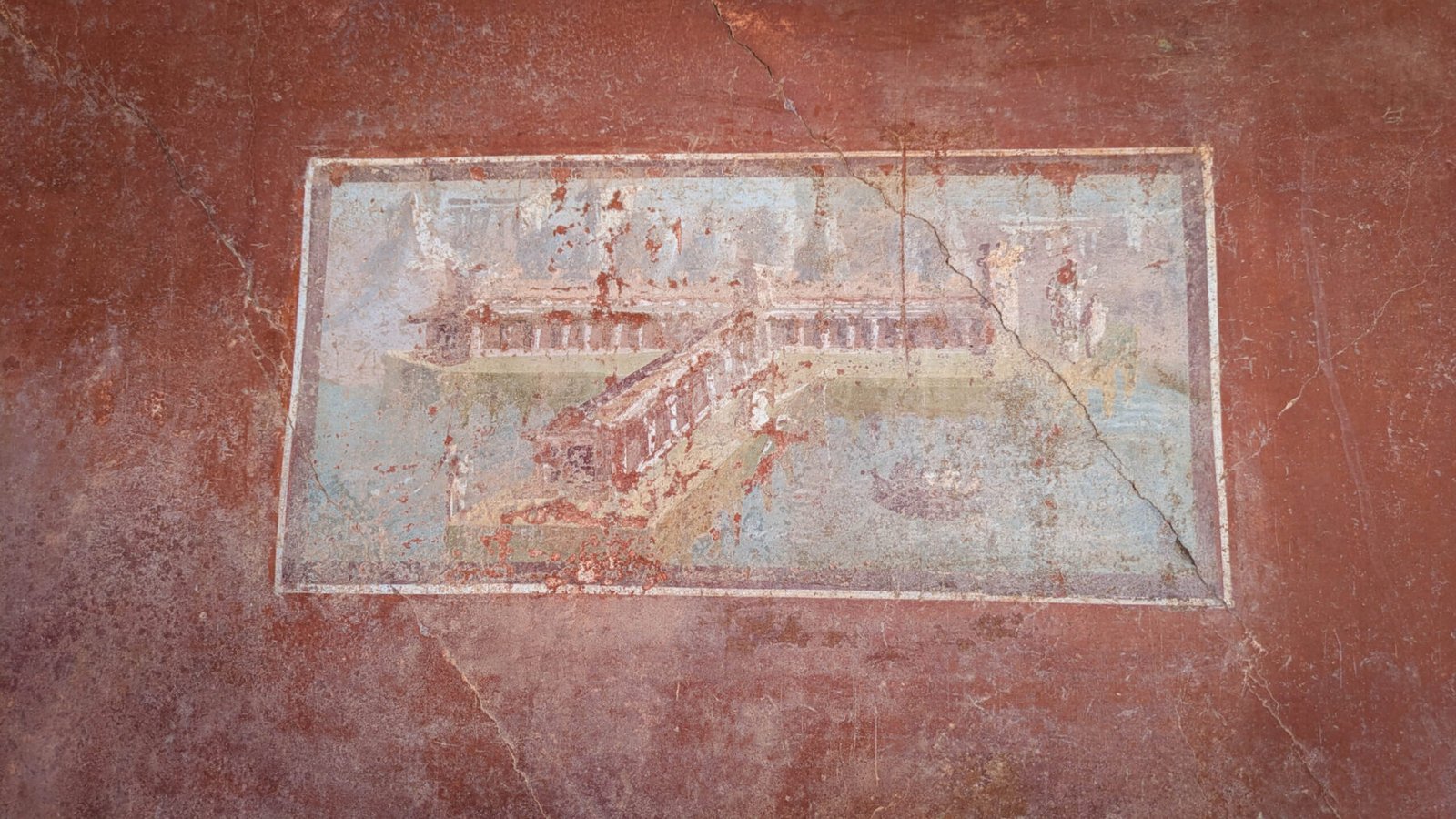
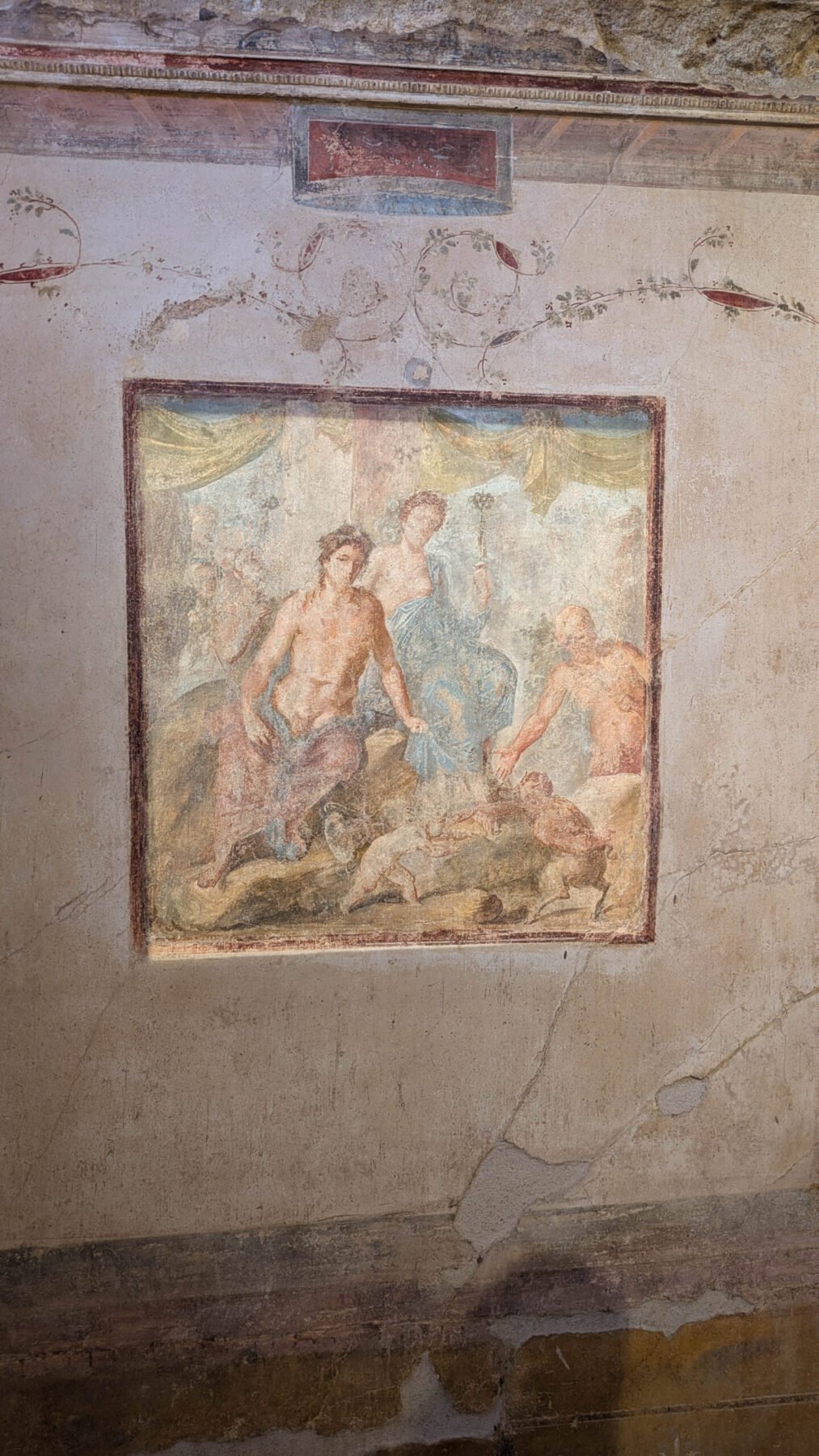
Inside the villas, the frescos are breathtaking, vivid, intricate and remarkably well-preserved. They display all four artistic styles, from the simple First Style to the illusionistic Fourth. I remember the first time I encountered them online, fascinated by the transition from First Style to Fourth and to this day I can’t pick a favourite, although if pushed it might have to be Second style, based on the idea of bringing the outside, in, using architectural themes, columns and windows into other scenes giving a level of depth that leaves you staring at its beauty. Seeing them in person, though, is beyond words.
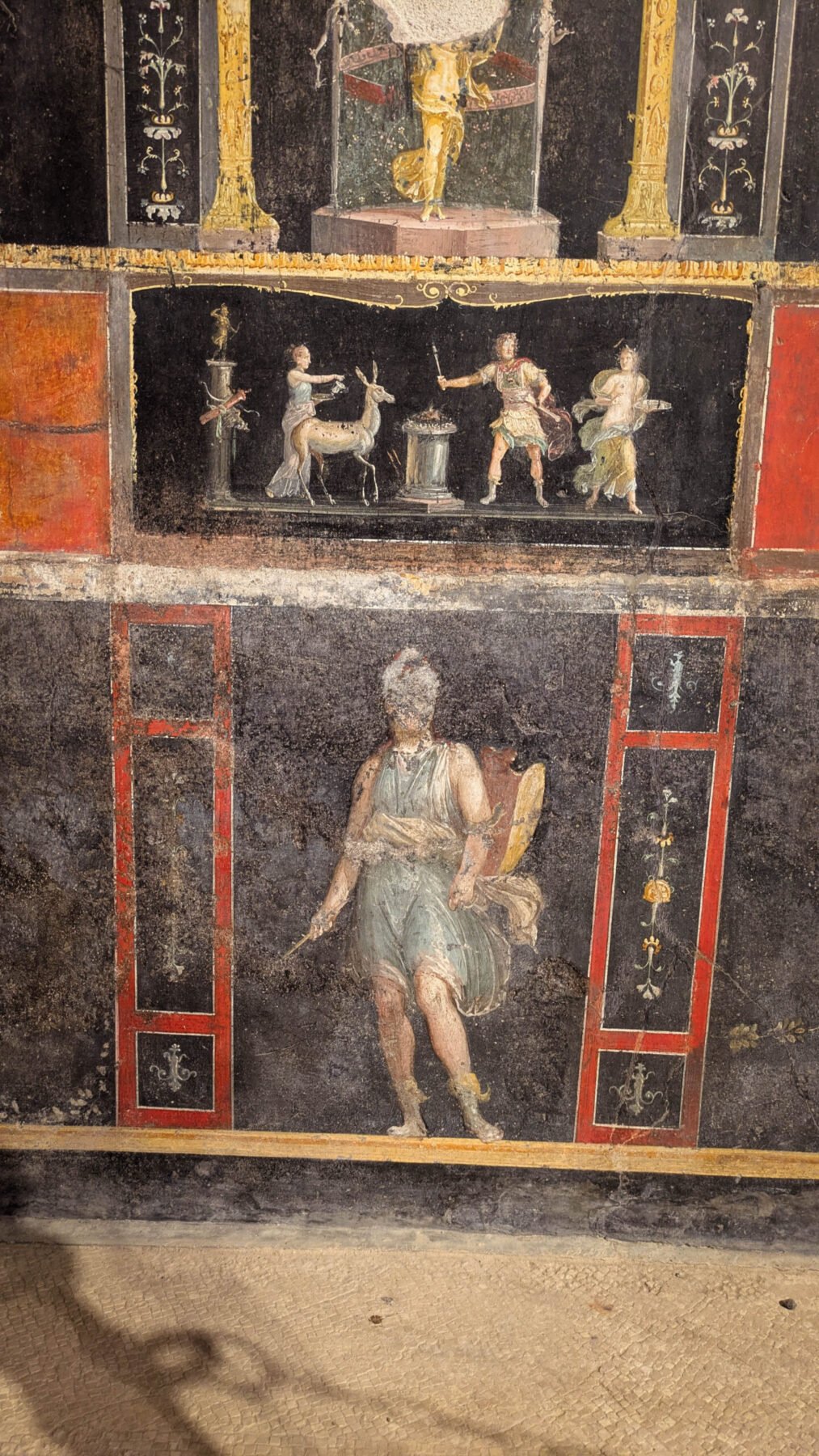
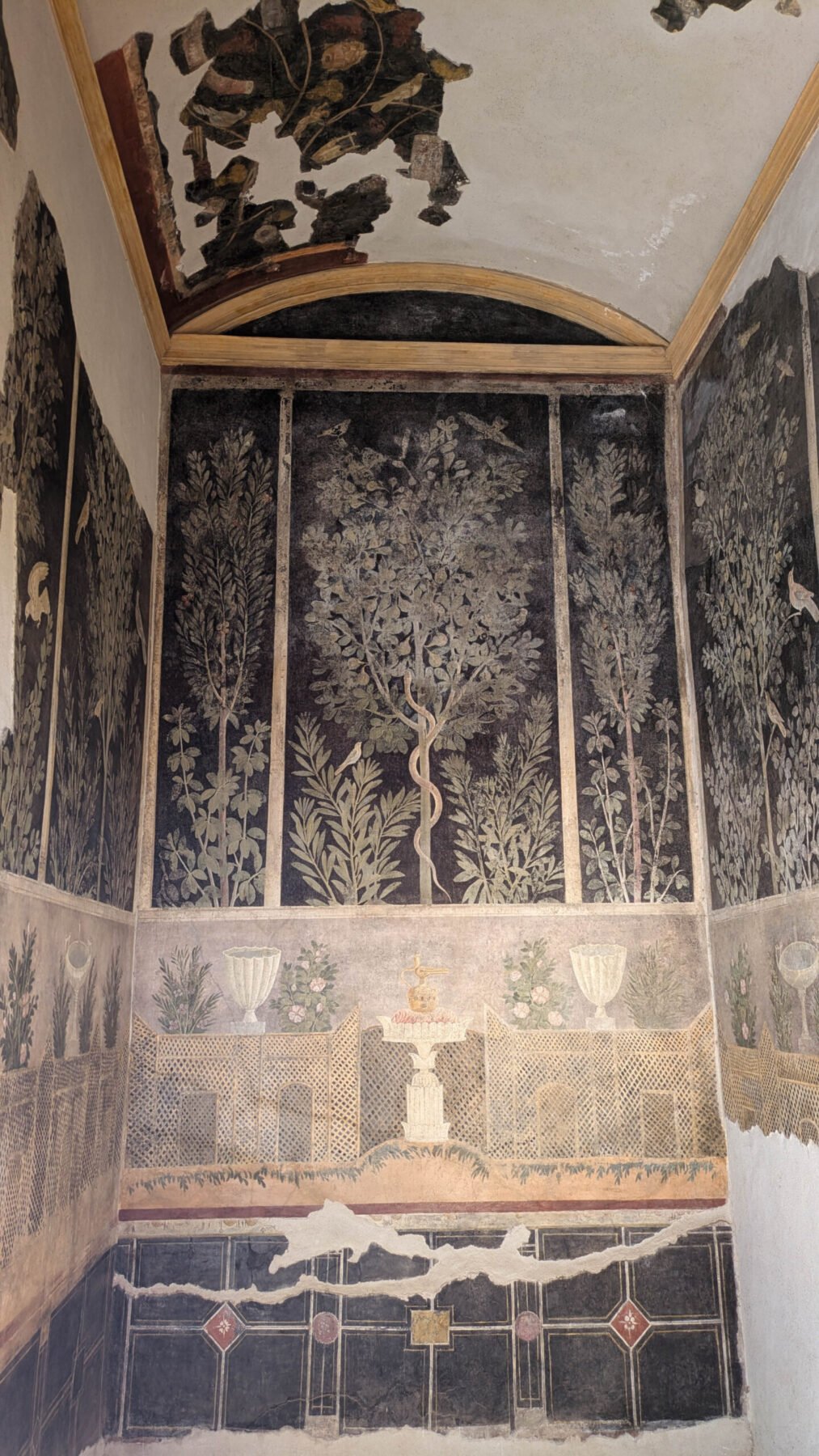
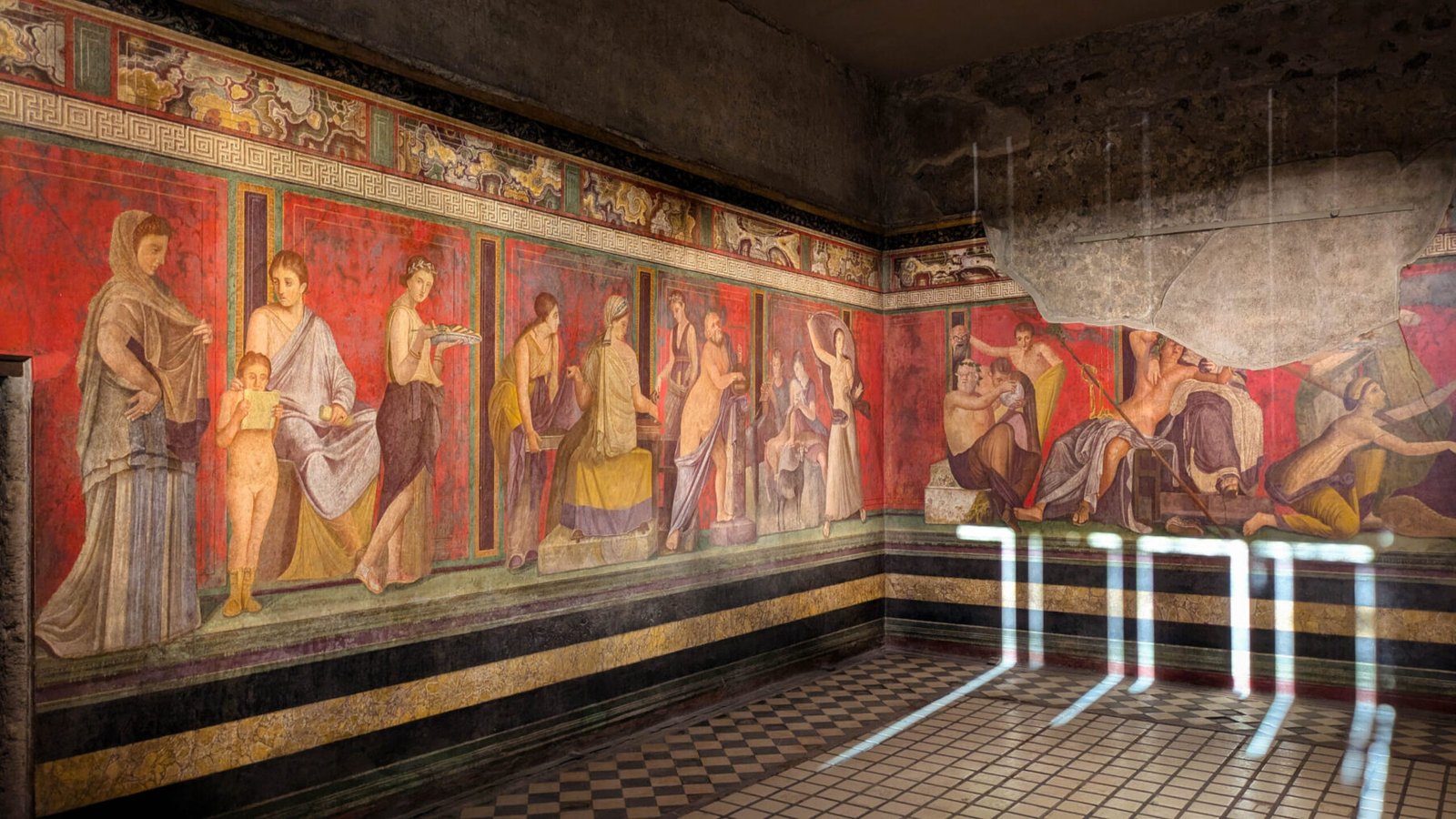
At the Villa of the Mysteries, I was absolutely mesmerised by the enormous fresco, the colours, the atmosphere, the way the setting sun added drama to every detail. It’s a sight that stays with you.
Baths, Temples and Timeless Beauty
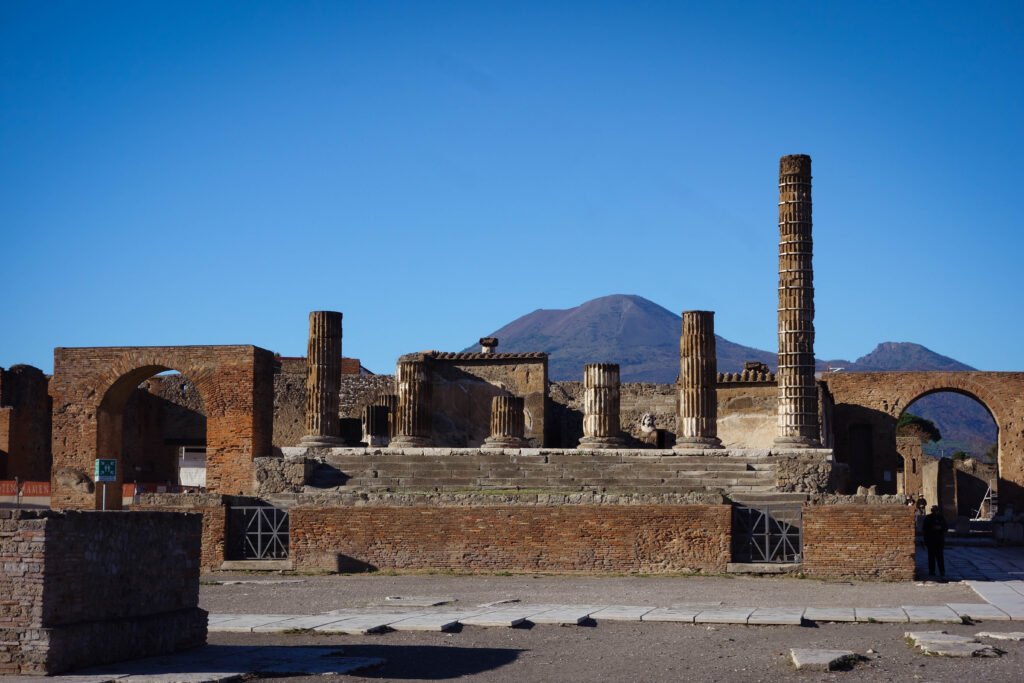
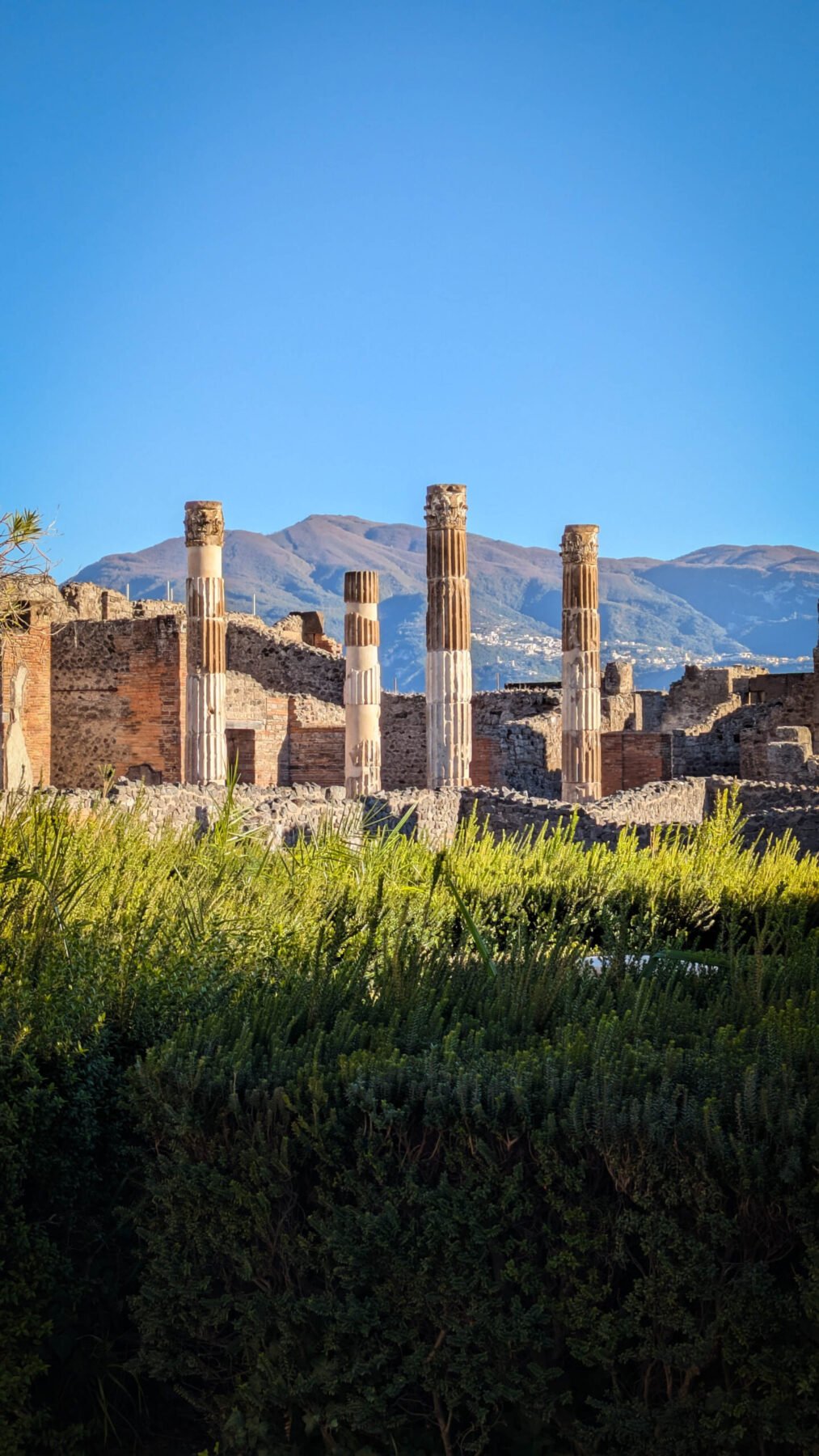
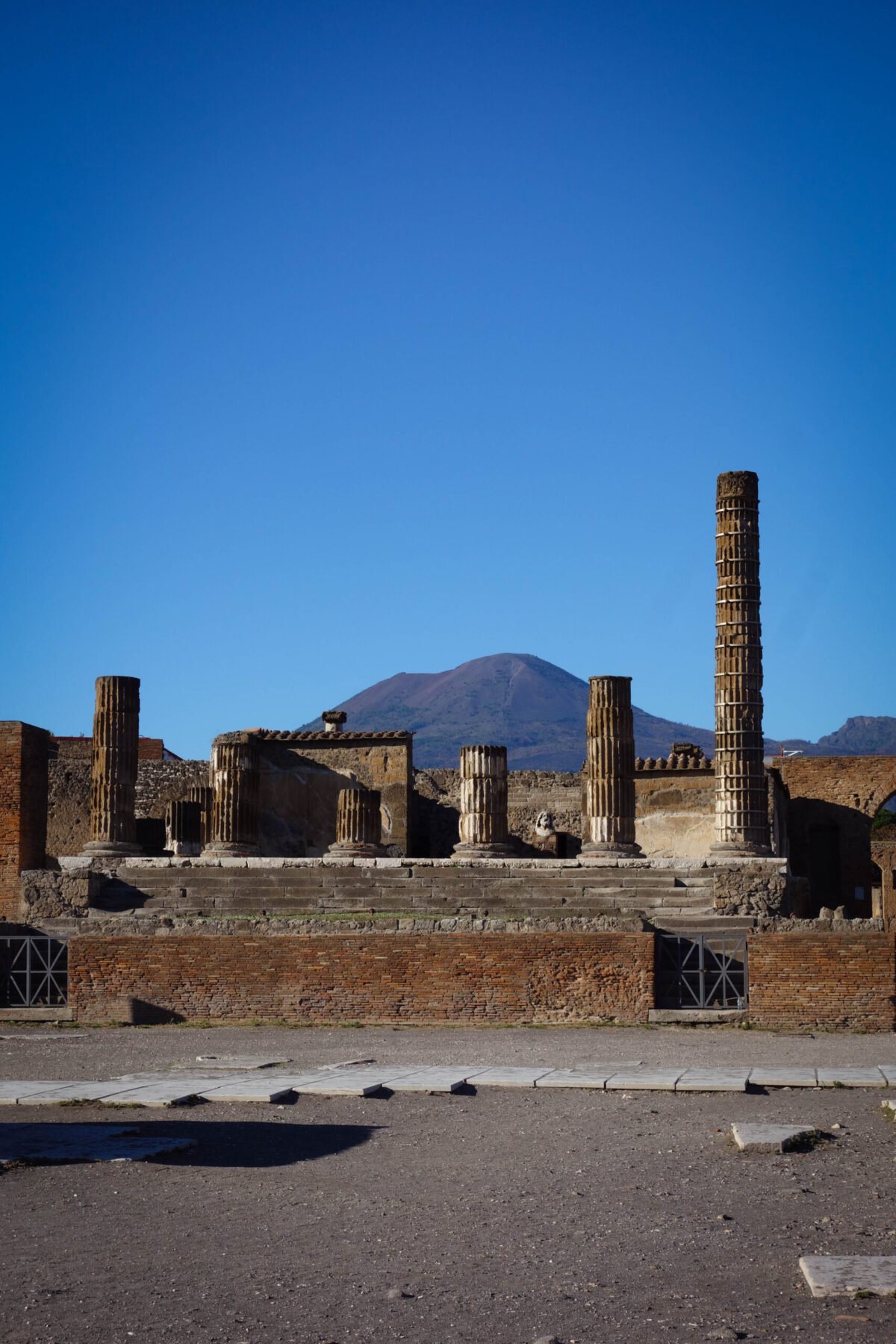
Reaching the Forum, the ruins open into a vast, breathtaking space once at the heart of ancient life. You have to imagine the site over 2000 years ago, the hub of Pompei, dominated by the Temple of Jupiter, the colonnades surrounding the square and paved with beautiful Travertine stone, it would have been something to behold
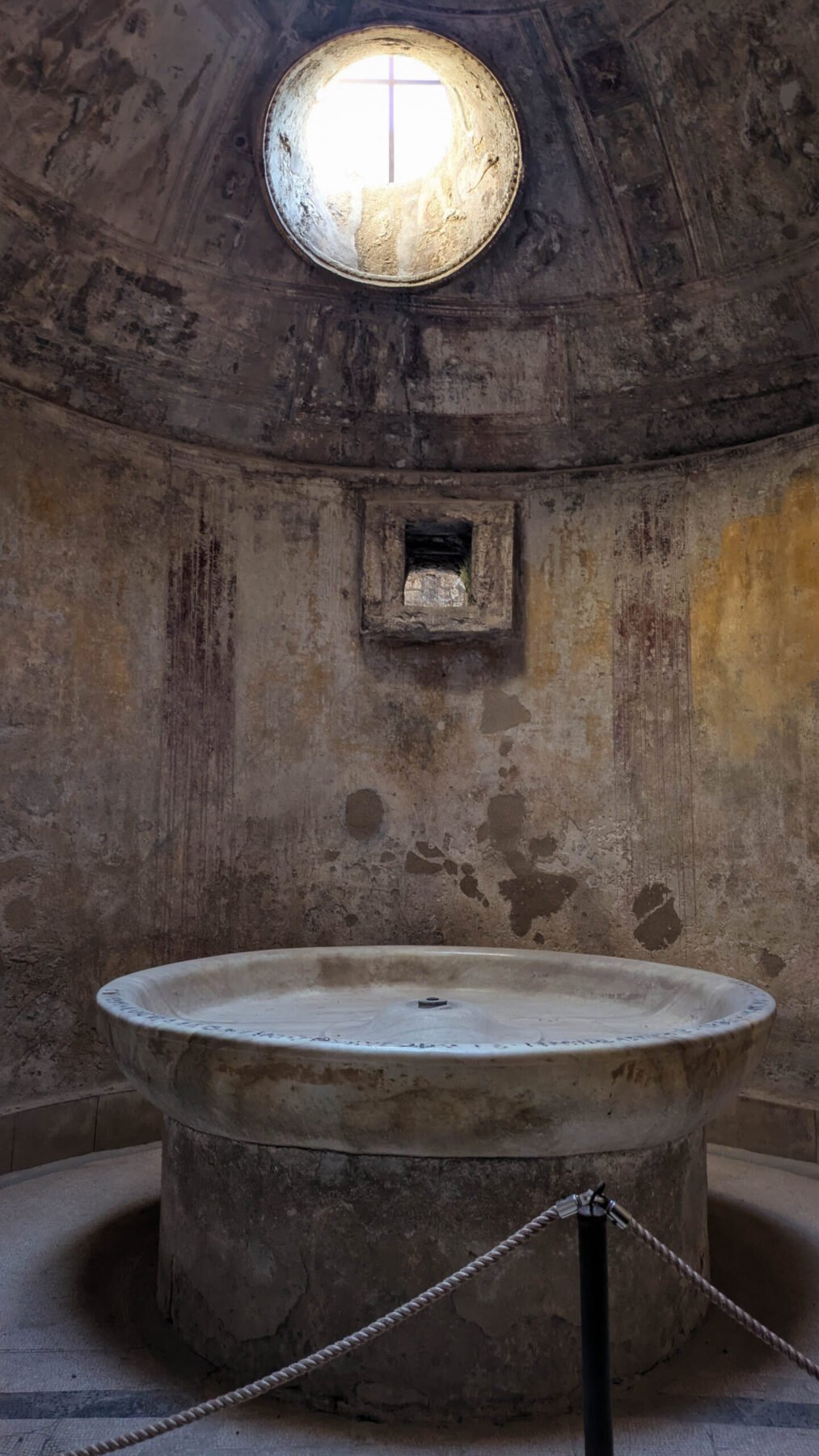
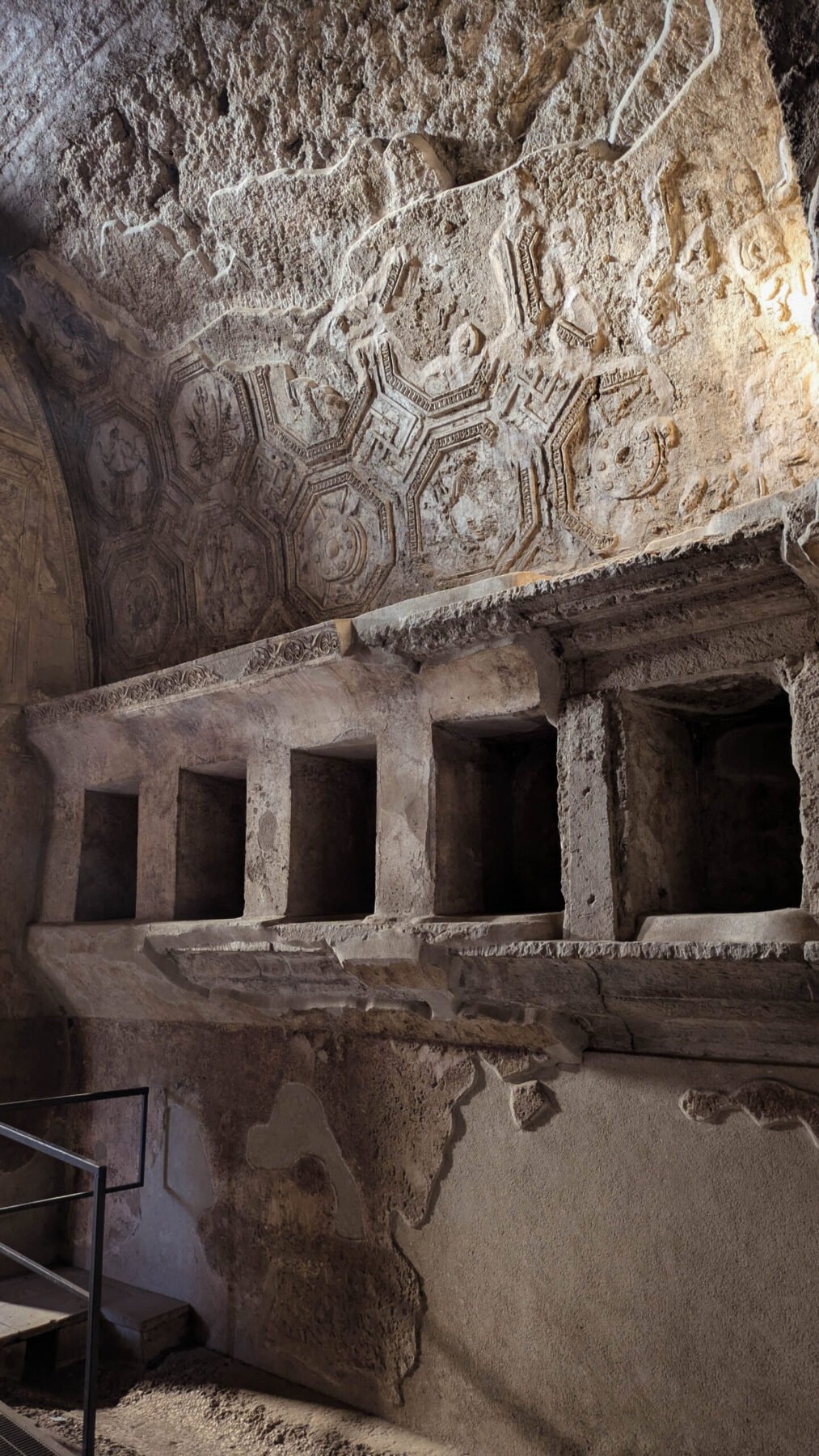
Then came two of my favourite sites: the Terme Stabiane and Terme del Foro, the ancient bathhouses. I’ve always found them fascinating, from the ingenious hypocaust heating system to the careful layout. You start in the apodyterium (changing room), move to the frigidarium (cold bath), lit by an oculus above, then the then onto the tepidarium (you can guess what kind that is can’t you, yep, the warm bath) and finally, the caldarium (hot bath). A perfect sequence for relaxation, Roman-style.
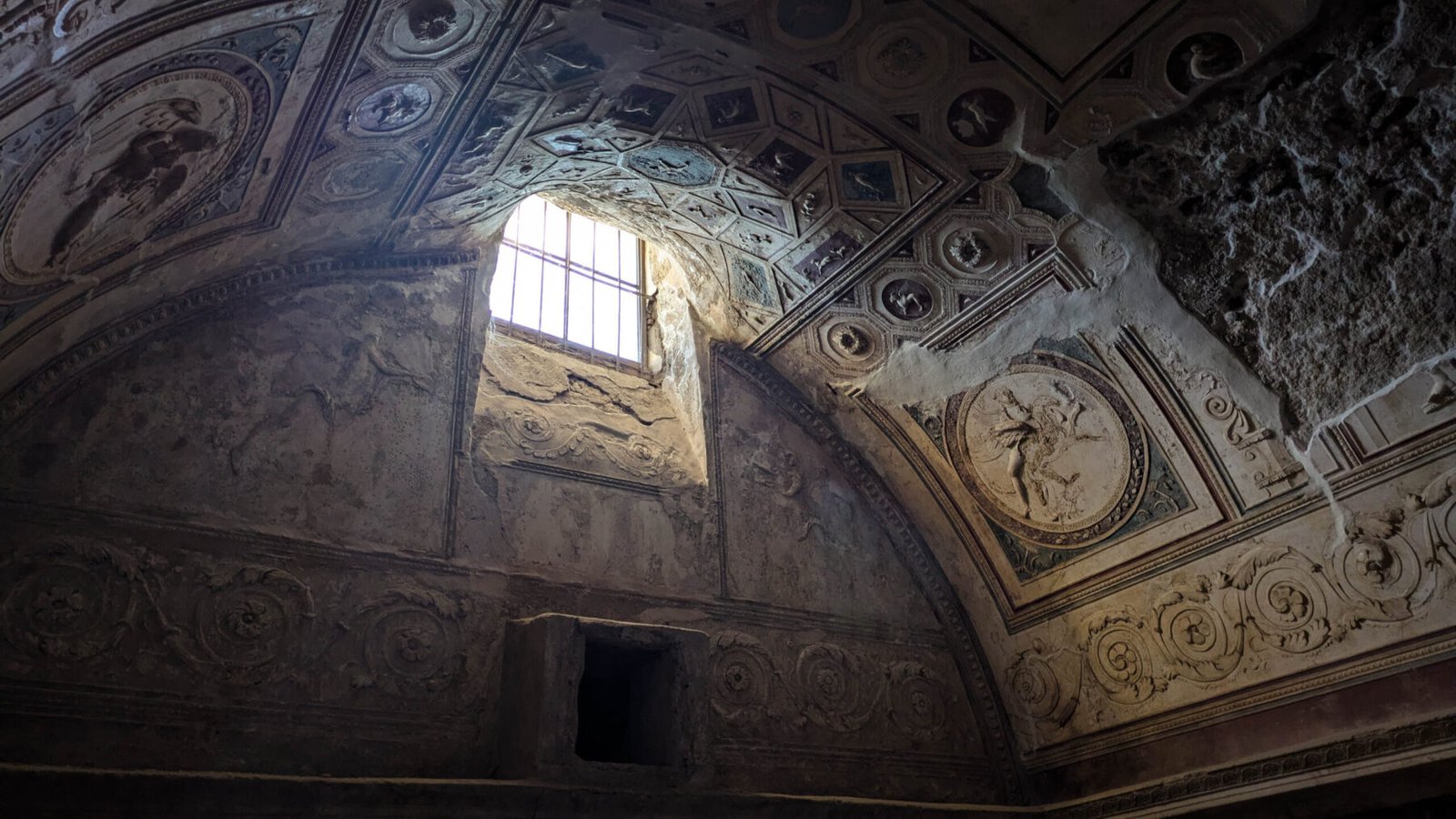
And of course, no visit is complete without the Villa of the Mysteries. A little walk from the main site, but absolutely worth it for that magnificent fresco, a masterpiece of storytelling in colour and form.
End of the Day, but Not the Journey
Pompei has so much to offer that one visit could easily fill a book. Each time you return, you notice something new, a hidden detail, a newly unearthed artefact, or simply a different perspective. It’s a place that keeps on giving.
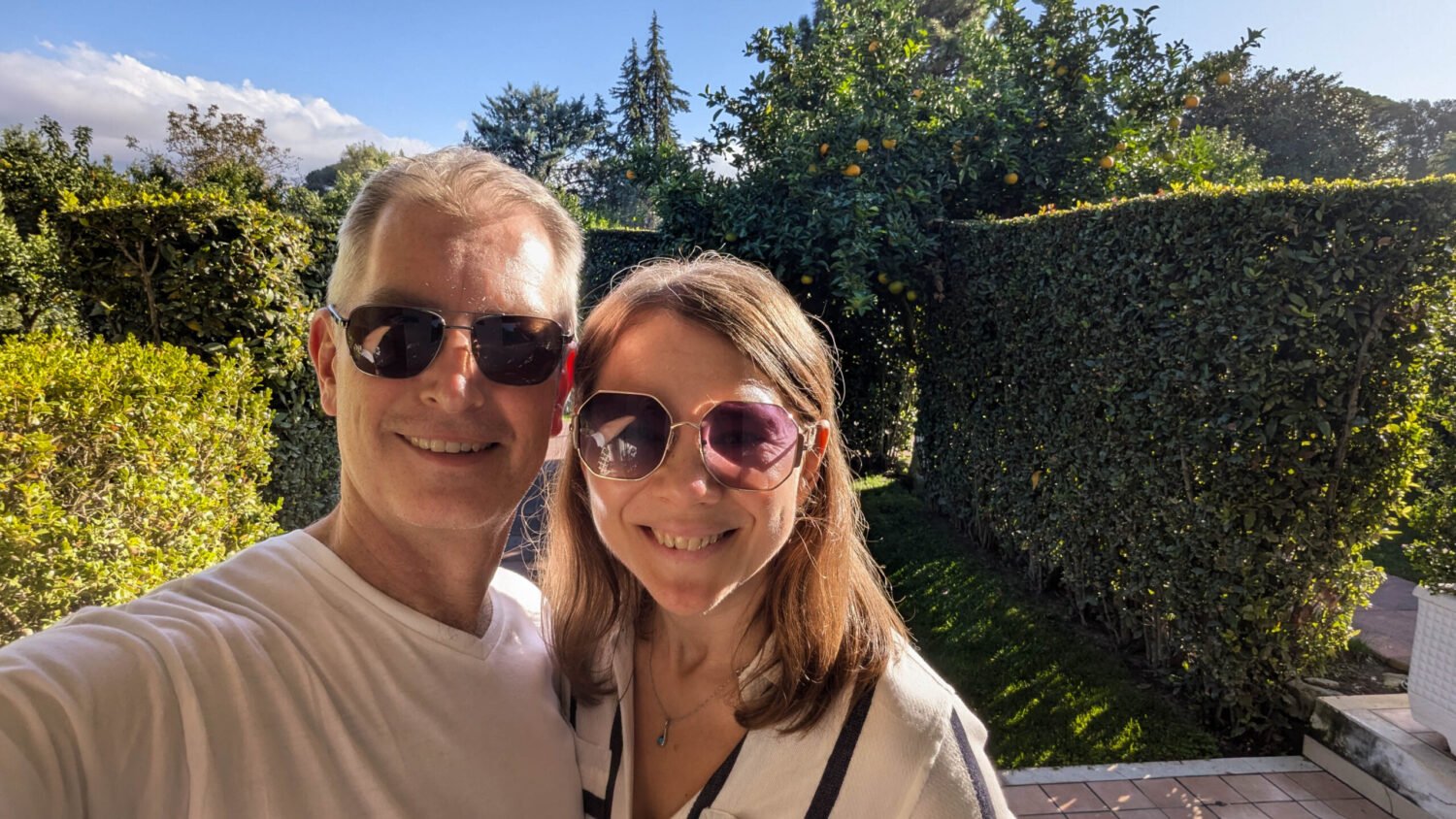
As the sun dipped behind Vesuvius and the park began to close, we made our way back to the hotel, ready to freshen up and set out in search of the perfect restaurant (which definitely deserves its own post, stay tuned!).
Next up on our Italian adventure sees us wind our way up Vesuvius, walking the streets of Torre del Greco and seeing what secrets Herculaneum holds.